

Under Capricorn (1949)
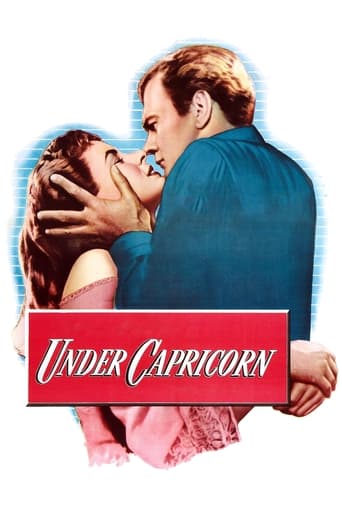
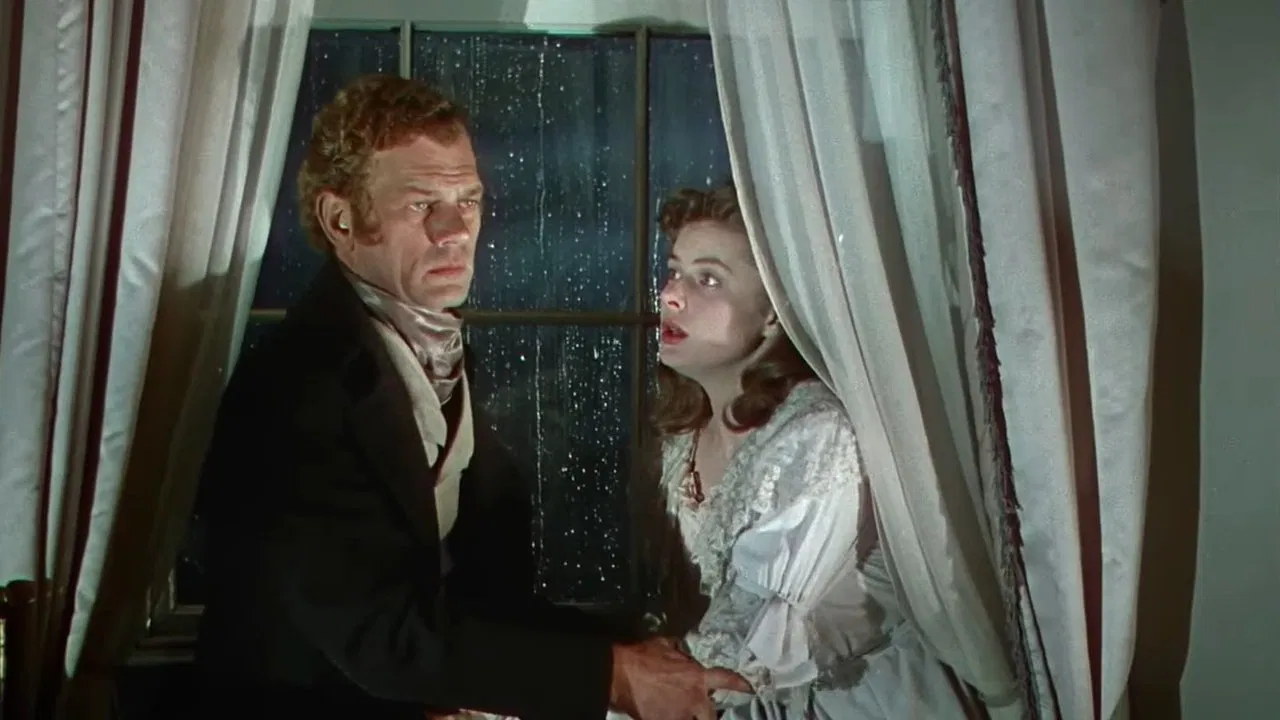
A British ex-convict in colonial Australia and his fragile wife, haunted by the past crime that binds them, struggle to rebuild their lives when a young newcomer stirs long-buried passions and secrets.
Watch Trailer

Cast


Similar titles



Reviews
While it doesn't offer any answers, it both thrills and makes you think.
Not sure how, but this is easily one of the best movies all summer. Multiple levels of funny, never takes itself seriously, super colorful, and creative.
Close shines in drama with strong language, adult themes.
While it doesn't offer any answers, it both thrills and makes you think.
When one thinks of Alfred Hitchcock, the "period drama" genre does not immediately come to mind. Unfortunately, "Under Capricorn" does nothing to sway that perception, as (despite some decent character development) it can best be described as ponderous and too full of bloated dialogue.For a basic plot summary, "Under Capricorn" sees Lady Henrietta Flusky (Ingrid Bergman) of Australia struggling to maintain the household of husband Sam (Joseph Cotten). When childhood friend Charles Adare (Michael Wilding) comes for an unexpected visit, however, Henrietta begins to perk up and clash with current housekeeper Milly (Margaret Leighton). Along the way, a great deal of past history among all parties is drudged up.The trouble with "Under Capricorn" is simple: there is absolutely no action/suspense whatsoever. The character development is actually decent, but none of the typical Hitchcock suspense or thrilling sequences are present in this movie. Just too much talking and not enough "doing", in essence.The only redeeming factor for this film whatsoever is some great acting from Cotten, who truly carries this film. Bergman may be a great actress, but her character in this one just isn't all that intriguing. It is Cotten who is a joy to watch scene in and scene out.Put simply, "Under Capricorn" is a slow-moving Hitch effort that just fails to captivate. It isn't terrible, per se, but there is very little excitement involved in the process. Unless you are a huge fan of Victorian-style love stories, or are (like me) making your way through the Hitch collection, I would say you can skip this one.
... as the film really fell under my expectations. "Under Capricorn" is the third Hitchcock's costume drama and the last one. That Hitch never gave a fourth trial says enough, history isn't just his strongest suit.Indeed, Hitchcock is an expert of human emotions and knows more than any director how to convey the most complex and thought-provoking of them in challenging plots, never stingy on twists and surprises, as long as nothing undermines the viewers' attention. Maybe the costumes, the flashy settings all the attention to historical details are too distracting or too time-consuming, maybe people of the 19th century are too exuberant, too solemn or to melodramatic to fit in Hitchcock's universe or to allow him to express his wicked sense of humor and his mastery of suspense. Maybe Hitchcock is too 'modern' for this kind of film.To give you an idea, just look at the positive comments, they all praise the acting, the costumes, the directing, the cinematography this is not a good sign when a Hitchcock movie is judged on these peripheral and banal elements. Hitchcock movies strike you for two things: action and/or characters and one of them generally makes the film, both in the best ones. When I saw "Gaslight", I immediately came to review my utter disgust toward Gregory Anton, one of the most despicable villains I had ever seen, this is the kind of strong reactions or emotions a film should inspire. But "Under Capricorn" is no "Gaslight".Why do I bring "Gaslight", which isn't even a Hitchcock film, in a review of "Under Capricorn"? I think it's pretty obvious when you saw both movies. "Under Capricorn" had a great potential and a story that promised to be emotionally engaging, no one can endure the sight of poor Bergman being 'gaslighted', not again. Australia wasn't much of an exotic location except for one parameter: the story is built upon the common fact (and not so myth) that many of the first inhabitants were ex-convicts, and after they did their time, they could get back to society and good manners commanded not to ask a man what he's done before. This is a great plot device because from the outsider's standpoint, anyone is suspect.Yet nothing is really made out of that interesting premise. It only serves to hide one secret, the secret of the character we know from the start he's hiding a secret. The exposition takes a long time to present us some characters but their contribution to the plot is so nonexistent you wonder why they were shown to us in the first place. Basically, the film is a seemingly love triangle between Michael Wilding as a young Irish coming to seek fortune, Joseph Cotton as Flusky, a gruff man doing business with him because his past prevents him from buying lands, and his wife Hattie, played by Ingrid Bergman. Unfortunately, none of these three actors can save the film from its long and flat way toward the ending.And I think Hitchcock's fans are intelligent enough to make the difference between drama and thriller, and just from the costumes, they can tell that a film won't be part of Hitchcock's canon. But even by pure dramatic standards, the film doesn't quite work. The main protagonist is an insolent little prick who's so overconfident you want his journey to go through some humility-teaching experiences. None of that, he's as cocky as arrogant in the ending. You expect that the unmasking of the antagonist played by Margaret Leighton will be the result of a suspenseful or at least tense moment; no she is simply caught in the act in the cheapest and most convenient way. I'm not asking for cheap thrills but just action.Drama was the Greek word for action, but "Under Capricorn' might be one of the most talkative movie ever, the plot is only constructed on talks, exchanges and revelations. And the most thrilling moments are immediately canceled off by talking and talking again. This is definitely not a Hitchcock film and while he didn't have a strong reputation when he made "Waltzes of Vienna" and "Jamaica Inn", in 1949, he had so many great movies under his bundle that he couldn't expect "Under Capricorn" to be above people's expectation. Yet the film happened to be ecstatically praised by the Cahier du Cinema French authors, and François Truffaut and Claude Chabrol had the most apologetic words.What did they find in this film? Beats me. But if they're the guys who deemed Clouzot as old-school, you know the closest rival to Hitchcock, it's a wonder how they could blindly adore this film. It is the height of snobbery when you take your adoration to a director as a basis to love whatever he did. Well, Hitchcock who's still one of the greatest directors, was entitled to have a few misfires and this is one of them. You can't praise "Strangers on a Train" and "Rear Window" if you also love "Under Capricorn", it doesn't make sense. Again the film had a great potential, but it was executed as if no one cared to make an impact.And all the costumes and acting in the world can't save a film from dullness; the only interesting thing about it is in the way it makes you wonder how Hitchcock could fail with so many promising elements.
It is said that audiences, hoping for the usual Hitchcock fare and misled by the advance marketing for the film, were disappointed with the film. Hitchcock was undoubtedly disappointed with the box office. So why was Hitchcock attracted to the story?He had a fascination with the human mind--its tendencies, its prejudices, and especially its capacity for defect, what is usually termed mental illness. Here was a story that dealt with the degradation of a human mind at the hands of someone dedicated to its destruction.The story involves, principally, four people: Henrietta Flusky (Ingrid Bergman), her husband Sam Flusky (Joseph Cotton), Charles Adare (Michael Wilding) and Milly (Margaret Leighton). Living in Australia--a British penal colony--Sam had been convicted of the murder of Henrietta's brother. Milly is the maid who is very protective of Sam and runs the household. Charles, when introduced to the dysfunctional household, takes steps to bring Henrietta out of her alcoholic depression.As Charles unravels the mysteries of the manse, he realizes he must help Henrietta regain her sanity.Not only is the story about psychological torture, it is a film of suspense, as the conventions of society seek to thwart Charles' efforts to aid Henrietta. The film allows Hitchcock to take a swipe at society's views on punishment, proper behavior, the elite, and religion. The demons that possess Henrietta take many forms and Hitchcock mines the possibilities with his excellent camera work.But don't expect a murder mystery. Just let the script peel away the layers of this strange household.
Viewers who admire Costume Dramas and Stage Plays are likely to give this Hitchcock Film a pass or maybe even apply accolades. But, in truth, this is really a bore and a chore to get through.It is talky and purposely static in its composition of long takes, for what, who knows. It does pick up somewhat in the final third but by then snoozing Audiences will most likely not notice. It contains stiff performances and has a dull delivery and very slow pacing.Its only appeal is its controversy. Fans of the Director can squabble, and the French gave us their opinion that it is one of the best Films ever made (say what?), and it does have enough curious elements to make it worth one viewing.But be prepared for a long two hours and to top it off, most prints are faded and the glorious Technicolor that some are seeking remains lost in the Forties. So give it a go if you must, but no matter the talent involved it still remains a rather extravagant failure.