
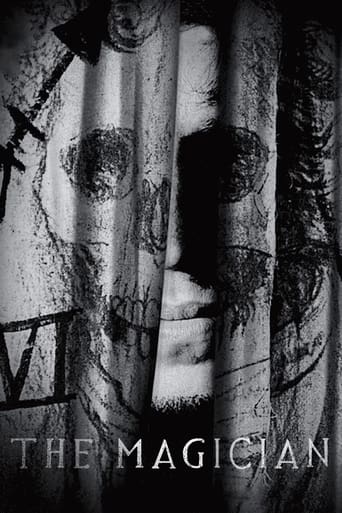

The Magician (1959)
A traveling magician and his assistants are persecuted by authorities in 19th century Sweden. Their capture, however, didn't bring victory to those in power.
Watch Trailer

Cast


Similar titles







Reviews
ridiculous rating
It's entirely possible that sending the audience out feeling lousy was intentional
This is a coming of age storyline that you've seen in one form or another for decades. It takes a truly unique voice to make yet another one worth watching.
The film's masterful storytelling did its job. The message was clear. No need to overdo.
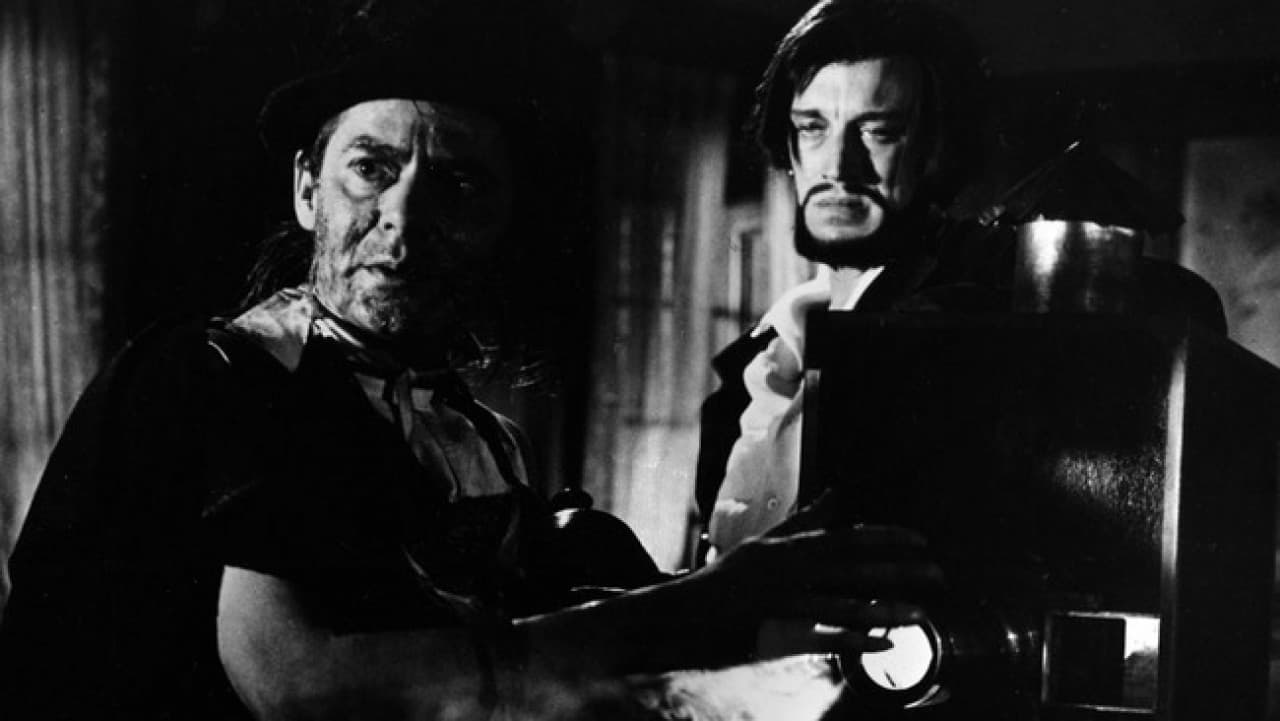
THE MAGICIAN is a very good fantasy drama with elements of comedy. A human drama about fates, masks and magic. One traveling magician, together with his companions, comes to a big city. Upon arrival in the city, he becomes the object of ridicule and accusations. The city authorities are trying to expose his tricks. Their efforts end in a farcical climax through love, sexuality, psychology and supernatural phenomena...Mr. Bergman has again managed to re-examine the important questions of life in an imaginary world. The phenomena that we do not understand are sometimes exciting. Mr. Bergman has tried to play with the human mind through human needs and instincts under the strong influence of illusions and transience of life. Emotions and excitement are colliding with tradition and intellect. The director has made a very pleasant deception. Mystery was complemented with games of shadows, mirrors and lightning. Brilliant sound occasionally breaks anxious silence.The dialogues are thoughtful and very provocative. Characterization is, as usual, excellent.Max von Sydow as Albert Emanuel Vogler is a magician, entertainer, a doctor, a charlatan and a crook at the same time. His character was captured by the irony of life and spiritual poverty. This can be read on the actor's face.Ingrid Thulin as Manda Vogler (alias Mr. Aman) is a beautiful and faithful wife of magician. Gunnar Björnstrand as Dr. Vergerus is a very provocative as a skeptical doctor. Åke Fridell as Tubal is a crook with a smile on his face. Bibi Andersson as Sara is a falsely naive girl, who fell in love with one coachman. Naima Wifstrand as Granny Vogler is a wise old witch, who sings a lovely lullaby for good night and sells rat poison at the same time. This is a good combination between the gruesome melodrama and lustful comedy that ends with a general farce.
This 1958 Bergman film is often overlooked, sandwiched as it is between Seventh Seal and Wild Strawberries on one side and the Faith Trilogy on the other. Nevertheless, it still offers many profound moments and remains a complex tale about masks and illusions.The film can be read as Bergman, the master illusionist, destroying the critics who set out to humiliate him. The fact that the magician has no apparent voice of his own but lets his act speak for him is a reflection of the director's role, quietly manipulating the audience from behind the scenes through his art.The traveling group of entertainers representing the restless, roaming life of the artist is a common motif through much of Bergman's middle-period work including Sawdust and Tinsel and the Seventh Seal. These characters are depicted as never at home in society, nor appreciated by it. Invariably they represent low-culture forms of entertainment from circuses and medieval troupes to, in this case, a magic and animal magnetism/hypnotism show. Perhaps there was still a feeling at this time that cinema could not be one of the high arts? This is ironic as Bergman was, of course, doing so much to legitimise cinema as a serious art form with each film he produced at this time.Masks and layers of truth are symbolic throughout the film. The magician lives his role and is only exposed at the end, after he has broken through his critics' own masks and truly scared them for one fleeting moment.Likewise, hands are symbolic throughout this piece. As an apparent mute, the magician expresses his thoughts through his hand gestures and it is a disembodied hand at the end that he uses as part of his tricks.The ending, however is truly subversive. Whilst the audience are encouraged to identify with the magician has he outwits the cynical and mocking critics, once his masks are stripped away, he is shown to be, indeed, just another vagabond entertainer who grovels for some money, whilst the critic, humiliated moments before, re-assumes his own mask. Rejected by the woman who loved the illusion and not the man behind it he seems on the verge of another defeat. Once the audience is tempted to conclude that perhaps the critics were right after all, Bergman follows with a feint of his own: the magician has found royal favour and is off to perform at court. Whilst the petty officials have rejected him, he is about to be received by the highest office in the land.In terms of social strata, he has moved from a station well-below the officials to a privileged audience with the king that they themselves have probably never had. The artist has triumphed over his critics.
I don't think the ending was disappointing at all! What really stroke me in this movie, what I find the best - is the final part, for all its turning points. Vergerus and the others SEEM so triumphant and the Magician so humble, but just seconds before Vergerus was trembling with fear and almost denying his lifelong convictions. The humble one had mastered all of them before. I think the whole movie is about illusion and how people are eager to believe in magic. The hosts find themselves very powerful in the end, but probably the same story will go on at the king's court now. The magician succeeded with his act, quite because he was exposed in the end. It wouldn't have been such a great thing for a real magic - empowered person to scare them. But they were all fascinated by actors / director, really... what a great performance! the film viewer himself was in for the game. A charlatan, yes, but what a dangerous one. The hosts lose after all, having been deceived by someone so weak...
I appreciate Bergman's mastery of cinema very much, especially his inimitable ways of story-telling, together with the splendid photography of Gunnar Fischer or Sven Nykvist, and - always - a magnificent cast of first-rate actors. Undoubtedly, "Wild Strawberries" or "The Seventh Seal" are classics of world cinema.And with regard to the cast and cinematography, "The Magician" is no exception to this appreciation. - However, I do feel a bit uncomfortable each time a touch of humour comes up in Bergman films. In my humble opinion, these movies mostly haven't aged so well - be it that our sense of humour has changed over the past 50 years, be it that Bergman's humour might seem a bit forced, in the first place. My overall impression of "The Magician" is that of a fairly heterogeneous movie with a tremendous beginning, then with several changes of mood (and BTW large plot holes, as well), and finally a rather unfitting ending. In my opinion (I truly hate to say so): one of Bergman's weaker efforts.